
#Trinity60
The School Magazine History

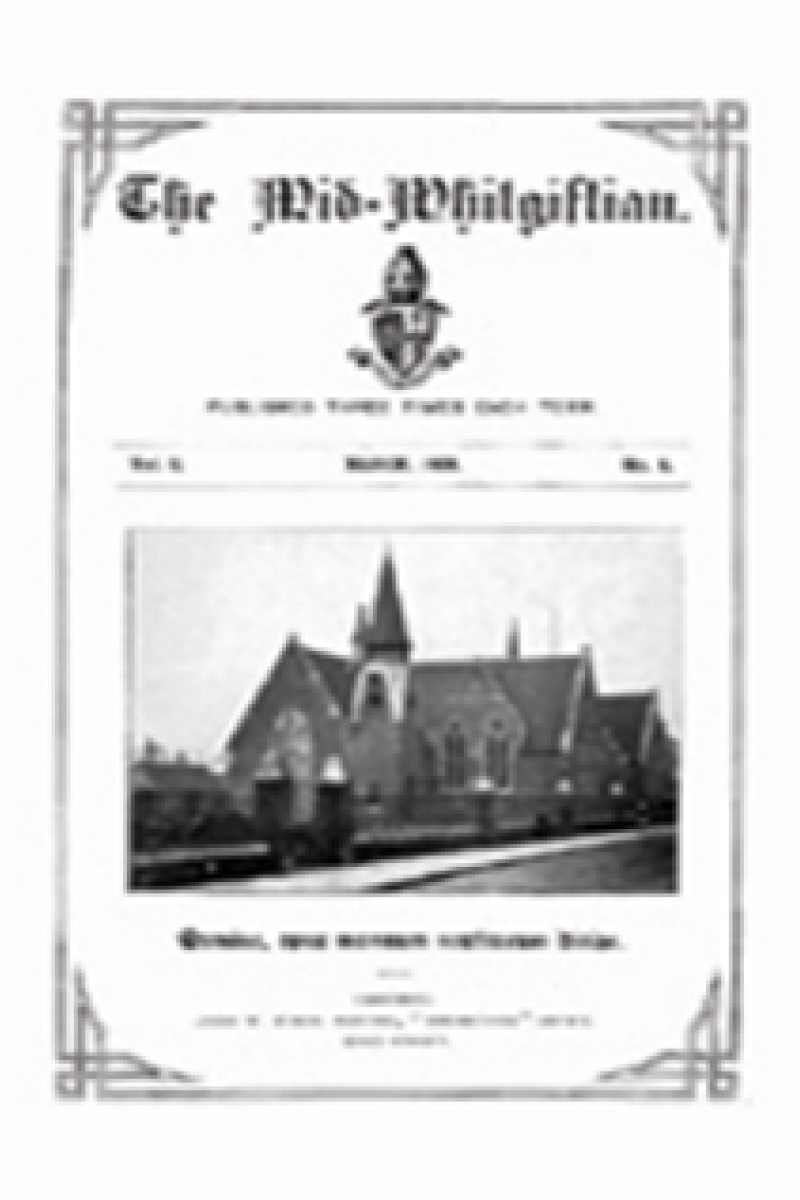
The School Magazine of Whitgift Middle School and Trinity School Over the Years
'The Mid-Whitgiftian', as it was then known, first appeared in March 1908, a few days after the death of the first Headmaster, Mr William Ingrams. It was printed on A5 glossy paper, 16 pages long, and published with the rash announcement that the magazine would appear ‘Three times each term and costing Four pence per copy!’ (A resolve that was soon dropped as the magazine was issued once a term from 1912!)
On the front cover appeared a photo of the School (Church Road site) with the Latin inscription 'Domine opus manuum nostrarum dirige' - 'Master, direct the work of our hands'. The contents of this first magazine included an Introduction by the Headmaster; School Notes relating to successes in Public Examinations; a report from the Natural History Society; a list of school cricket fixtures and a report from the Old Mid-Whitgiftian Association on their proposed activities, with a list of their members. The formation of the Old Boys Association came from a suggestion by the new Headmaster, Rev G A Jones, that the Old Boys, who met regularly for an annual dinner in November, should form a properly organised Association.
The war years of 1914-1918 saw ten magazines published at irregular intervals but none in 1918. The war's occurrence was much in evidence, with many copies of letters to the Headmaster detailing losses of Old Boys, and an updated Roll of Honour published at regular intervals. From 1919 onwards, advertising in the magazine was permitted to cover the cost of paper and printing.
There were changes to the style and character of the magazine and it was stated that there were to be two main objectives: 'Firstly, to furnish an accurate and permanent record of school activities and achievements and secondly, to act as a vehicle of self-expression for the members of the school'. The Magazine was to be regarded as an important part of the School organisation.
The Christmas edition of 1919 published the School Song, which had been written by our Song Master, Dr H L Balfour, with words by Mr J W Cove, a member of staff. Importantly too, in this edition, a supplement appeared entitled 'The Old Mid-Whitgiftian', which was published separately, as it is today.
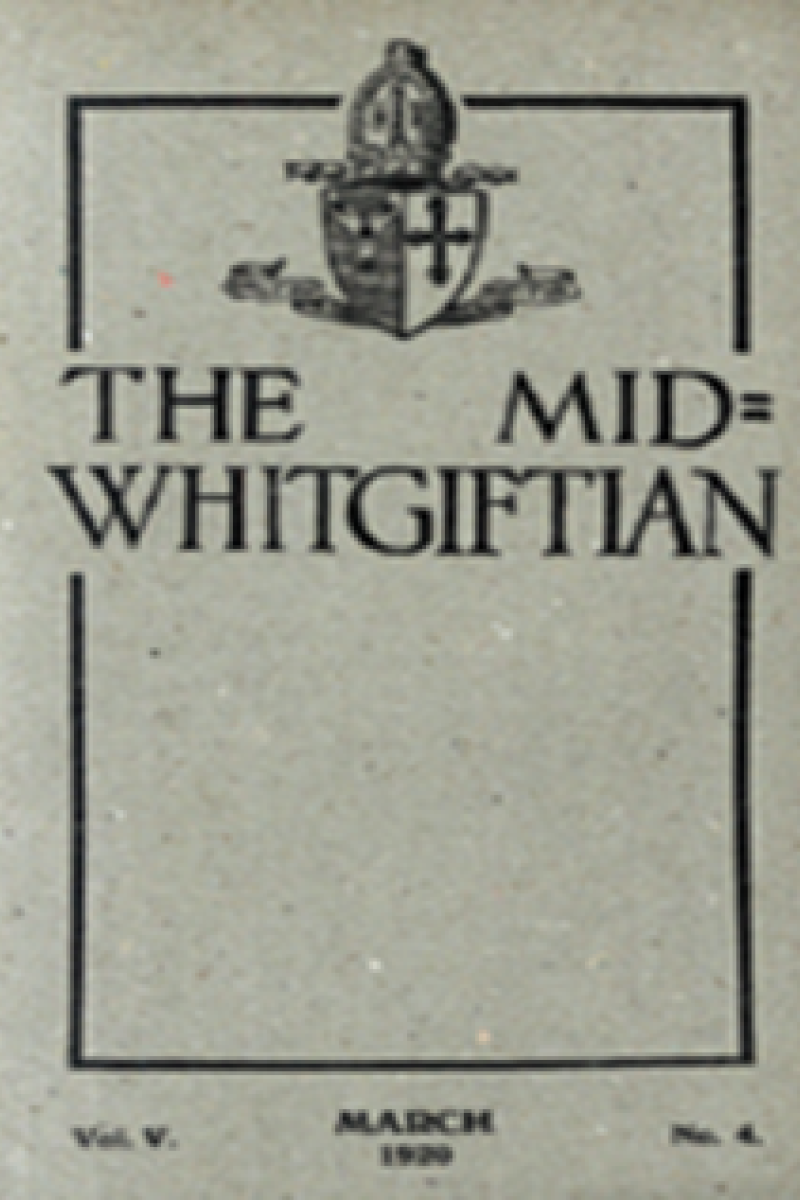
A new cover design appeared in 1920, with a blue and dark brown front cover (the school colours of the day) replacing the photograph of the School, which had appeared on every edition up until then. By 1931, the size of the magazine had increased to the size of an exercise book, containing 48 pages. The general content of the magazine remained the same however, with the magazine encompassing the principles that had been decreed in earlier years.
With the start of World War II, it was decided to issue the magazine 'as economically as possible', as it was felt important to 'preserve the work of the school in all its forms, to keep continuity in times when life is disturbed and dislocated'. At least two issues per year were produced throughout the war years and in the summer of 1945, a Victory Edition appeared. The Easter 1946 magazine was also a commemorative edition, this time to celebrate the 350th Anniversary of the Whitgift Foundation.
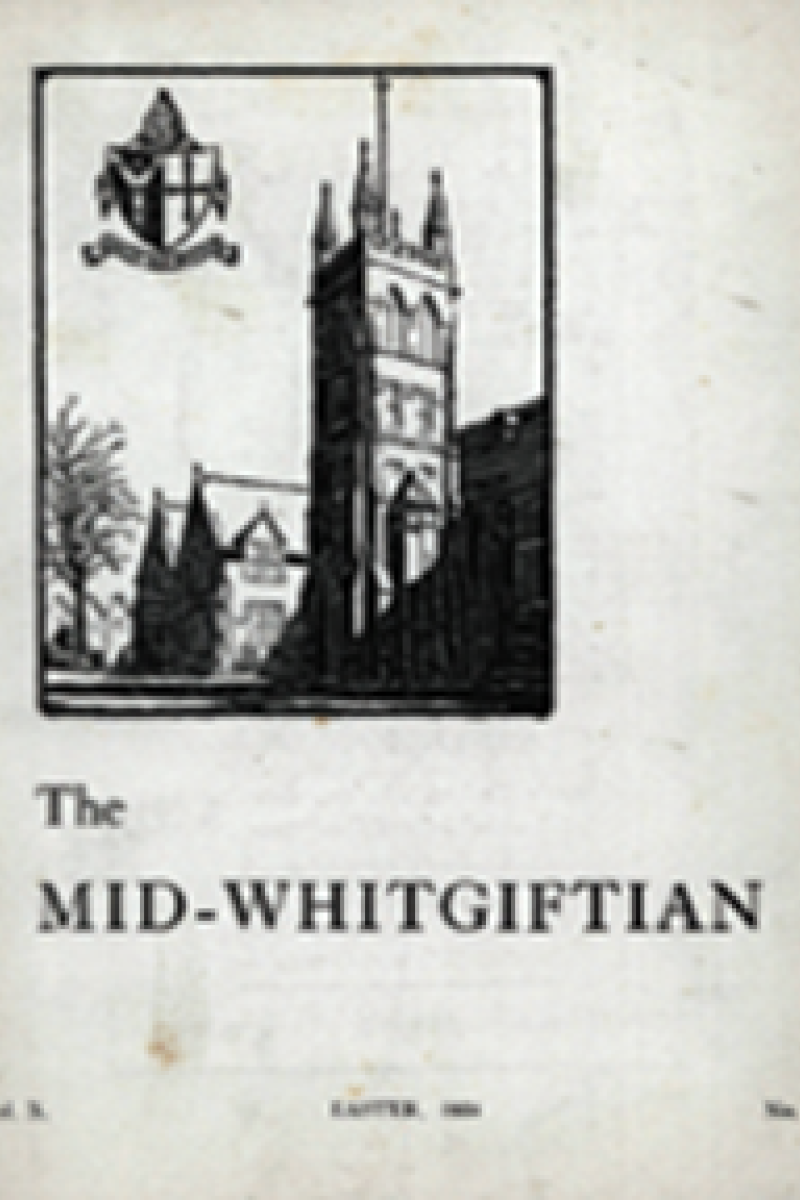
In the 1950s, advertising disappeared from the magazine, as the subscription payment (two shillings per annum) was made by Old Boys. Various sizes and styles of magazine came and went in the 1960s, together with the introduction of glossy covers, articles supported by photographs, pen and ink sketches, and an increase in size to A4. It was also noticeable how the content began to become less formal and ‘stuffy’ in style and that more and more articles were written by students who were definitely using ‘self-expression’ to convey their beliefs, views and opinions of current affairs and economic and political events of the day!
Changes in style have continued and the graphic content, both on the front cover and inside, has showcased the capability of the students’ skills, as well as the advances in techniques and computer applications available. The Editorial Committee of 1965 noted:
“We feel that this is an improvement for two reasons. Firstly, it gives an air of professionalism (in the best sense of the word) to what might otherwise appear a rather amateurish publication. Secondly, it enables us to insert the photographs at appropriate points in the text. Thus a snap of a rugby match actually appears in the Sports Section, and not in the middle of the magazine sandwiched between shots of the old and new School buildings.”
In 1980, the magazine became an annual publication and in 2011, the name of the magazine changed to The Mitre.

The present-day issues cover a whopping 90-140 pages and are jam-packed with articles reflecting every type of trip, excursion, event, activity or community involvement. In addition, high-quality team photos reflecting every sport and every representative team, whether the A, B, C, D, E teams or more for each age group, provide a most comprehensive visual record of students and the sports they love.
It is hoped that the school magazines of the future will adhere to the principles as decreed in the early 20th Century and continue to record for posterity the life of the School.