
#Trinity60
Earl Alexander of Tunis

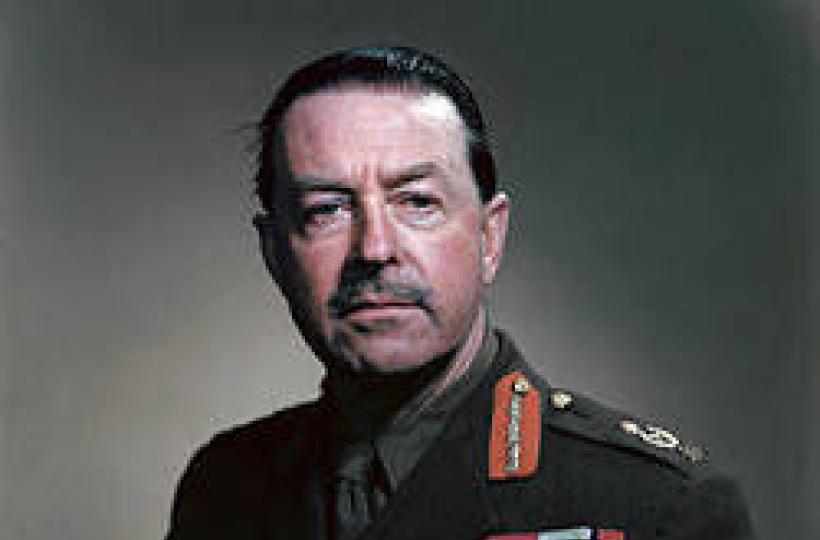
The Gentleman Soldier: Earl Alexander of Tunis in 1966
By May 1966, when Earl Alexander of Tunis stood before the parents and boys of Trinity School to unveil their new plaque, he was far more than just a visiting dignitary. To the public of 1960s Britain, he was a living monument—a tangible link to the "finest hour" and a figure of almost mythic status. At 74 years old, serving as the first Lord Lieutenant of the newly created Greater London, Alexander was one of the last surviving giants of the Second World War high command.
To understand how he was viewed in 1966, one must look back at the extraordinary career that brought him to that stage in Croydon.
The Making of a Field Marshal
Born Harold Rupert Leofric George Alexander in 1891, he was the third son of the 4th Earl of Caledon. An aristocrat by birth and an Old Harrovian, he seemed to embody the effortless superiority of the Edwardian officer class. Yet, unlike many of his contemporaries who were criticised for being out of touch, Alexander possessed a genuine, understated charisma that endeared him to his men.
His military reputation was forged in the trenches of the First World War. Serving with the Irish Guards, he was wounded three times and decorated for extreme gallantry. By the end of the Great War, he commanded a battalion—a remarkably young age for such responsibility. During the inter-war years, his reputation as a "soldier’s soldier" grew, particularly during campaigns on the North-West Frontier of India.
The Second World War: Crisis and Victory
It was, however, the Second World War that cemented his place in history. Alexander had a unique talent for stepping into disasters and managing them with an icy calm that settled the nerves of everyone around him. In 1940, he was the last man to leave the beaches of Dunkirk, famously building sandcastles on the shore while waiting for the final boats to ensure his men were evacuated first. Later, he oversaw the grim retreat from Burma, managing to save the army from total annihilation.
His star rose highest in North Africa. In 1942, Winston Churchill appointed him Commander-in-Chief of the Middle East Command, with General Bernard Montgomery as his subordinate. While Montgomery took the headlines for the victory at El Alamein, it was Alexander’s diplomatic skill and strategic oversight that made the campaign possible. He was the perfect foil to the prickly, difficult Montgomery; where "Monty" was vain and abrasive, "Alex" was modest, charming, and diplomatic.
He went on to command the 15th Army Group for the invasion of Sicily and Italy, eventually becoming Supreme Allied Commander in the Mediterranean. It was Alexander who received the surrender of German forces in Italy in 1945, a fitting end to a war in which he had played a central role from the first desperate days to the final victory.
Statesman and Peacemaker
In the immediate post-war era, Alexander’s ability to unite people saw him appointed Governor-General of Canada (1946–1952). He was hugely popular in the Dominion, taking a keen interest in the outdoors, painting, and the lives of ordinary Canadians. He returned to Britain to serve—somewhat reluctantly—as Minister of Defence in Churchill’s peacetime government. He was never a natural politician, disliking the murky world of Westminster intrigue, and he retired from the Cabinet in 1954.
The View from 1966
By 1966, Earl Alexander was viewed with a reverence that is difficult to imagine in modern Britain. The cultural revolution of the "Swinging Sixties" was underway, and the anti-establishment feelings of the late 60s were beginning to bubble, but the "Great Generals" of WWII remained untouchable figures of respect.
For the parents at the school opening, many of whom would have served in the war themselves, Alexander was the man who had turned the tide in North Africa. He represented a specific British ideal: the gentleman amateur who was actually a steely professional, the aristocrat who cared for his men, and the leader who remained calm while the world burned.
His presence at the opening of a school in Croydon was also significant due to his specific role at the time. In 1965, he had been appointed the Lord Lieutenant of Greater London. This was a new position for a new administrative area (the GLC had only just been formed), and Alexander was the perfect figurehead to lend gravitas to this new layer of government. When he spoke of being "impressed with the very progressive nature of the district," it was not just polite small talk; it was the Queen’s representative giving his blessing to the modernisation of London’s suburbs.
Furthermore, the Headmaster’s mention of "Europe Day" and the "freedom" Europe owed to Alexander was a poignant reminder of his legacy. In 1966, the memory of liberation was still fresh. Alexander was not just a celebrity; he was viewed as a liberator.
Legacy
History has occasionally been critical of Alexander’s strategic intellect, with some biographers suggesting he was too hands-off with subordinates like Montgomery. However, in 1966, such revisionism had not yet taken hold. To the public, he was simply "Alex"—the handsome, brave, and impeccably mannered hero who had helped save the nation.
When he stood in Big School that day, he represented the bridge between the old imperial Britain and the modern, progressive future the new school buildings hoped to embody. He was a symbol of duty, stability, and quiet excellence—values that the school undoubtedly hoped to instil in its boys.