
#Trinity60
Alan Desmond Youngs Obituary

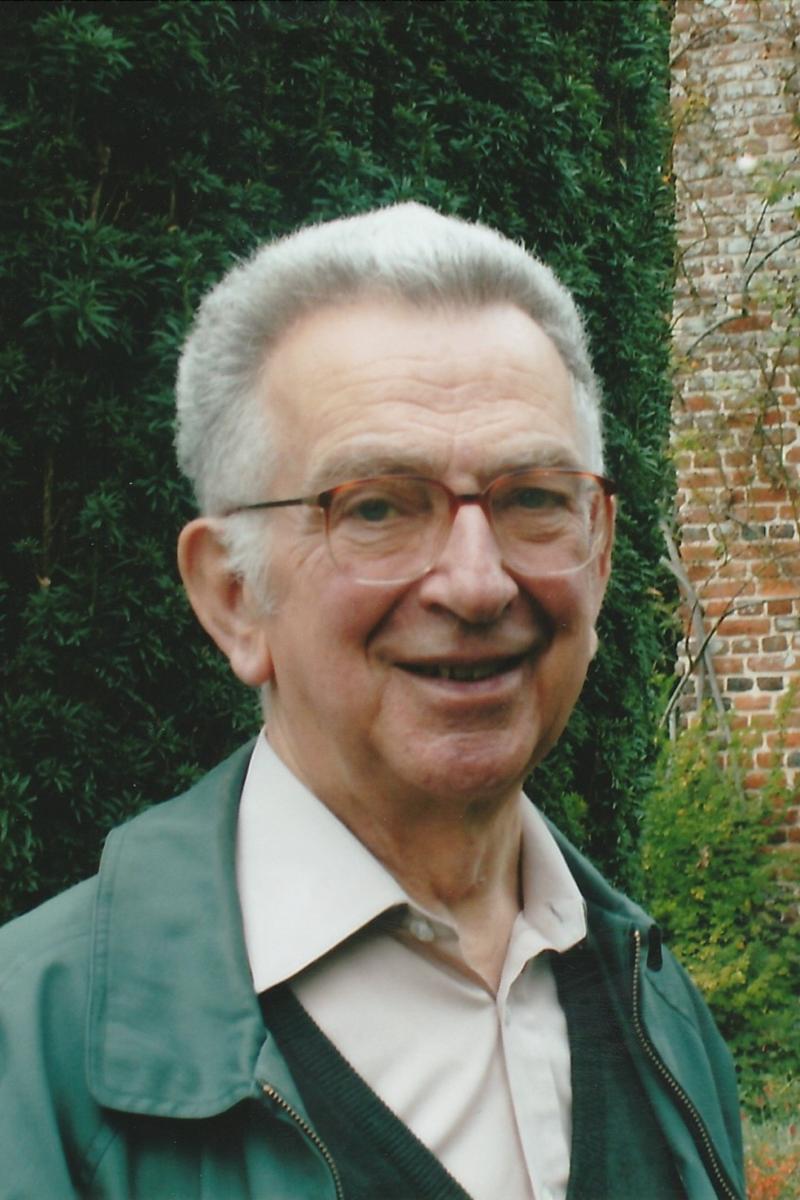
Born 16th October 1933– Died 26th January 2021 (aged 87 years)
Alan Youngs came to Trinity in September 1967 to be the Head of English. Before coming to Trinity, Alan was a Fenlander, educated at March Grammar School, Cambridgeshire and, having attained very academic results was awarded a State Scholarship and Open Award at Christ's College, Cambridge, reading History and English.
He was a Bombardier in the Royal Artillery during his National Service, which might explain his views about the CCF! Alan was a devout Methodist and in 1957 became an accredited Lay Preacher.
He started teaching at Chelmsford Grammar School then moving to become Head of the English Department at Rickmansworth Grammar School before coming to Trinity in 1967. As Head of the English Department, he also ran the Library for many years, encouraging generations of School Librarians, many of whom have cited how appreciative they have been of Alan's support. Many pupils owe their love of theatre to Alan's Arts Trips over the years. He was a caring, sensitive, modest and diffident teacher who never valued himself as highly as others did of him. Boys and staff alike appreciated and admired his level of commitment, the quiet but engaging style of teaching and challenge he made to ensure that an argument or viewpoint was well structured and thought out.
Alan produced many plays over the years and always tried to ensure that every pupil taking part, be it on stage or behind the scenes, learned from the experience to do a better job next time round.
Alan retired from teaching in 1994 to enjoy a long period of theatre going and the arts and to continue his work with the Methodist Church in Shirley.
Alan's eulogy by David Crook
I’d like to start by thanking everyone who has been in touch to tell me about Alan. It has been a great help in writing this tribute.
Alan came to Croydon in 1967, to take up his third teaching post as Head of English at Trinity School, across the road from this church. Alan’s first home in Croydon was in Ridgemount Avenue, where he lived in digs for nearly 20 years.
He was brought up as a Methodist and even before he came to Croydon, Alan had trained to be a Local Preacher. He did not have to look far to find a Methodist Church: Shirley Methodist was located between his digs and his workplace.
David and I first met Alan in March 1971 – fifty years ago now - when Alan had been Trinity School’s Head of English for four years. He seemed an earnest, rather formal figure, but very welcoming and hospitable, taking us out to lunch on the day we came to look round the school and view our Whitgift Foundation flat.
The department David joined was remarkably stable and cohesive, and among the most sociable in the school. This friendly cohesion was due in large part to Alan. He was convivial, and enjoyed social occasions; every year there was an English Department meal for staff and partners initiated by Alan. I remember his contribution was always a lavish cheeseboard.
Alan really cared for the members of his department, encouraging and mentoring the less experienced and playing to the strengths of the older hands. He led by the example of his thorough and meticulous professionalism. An ex colleague wrote:
‘I look back very fondly on Alan’s kind, supportive mentoring. It was my first job as a mainstream English teacher and his avuncular support and steadiness were hugely important. ‘
David calls Alan’s style of teaching and leadership the John Lewis method – “never knowingly underprepared” and David Parchot thinks of him as embodying the very best of that Old School tradition –“to serve them all my days”. He must have spent hours each evening producing schemes of work, reading packs, notes - regularly revised and rewritten – on every author, text and aspect of literacy and grammar, for the benefit of his pupils and his colleagues. All of these flowed unstintingly from his battered Lilliput typewriter and were known, facetiously but affectionately, as ADY Funpacks. They were of enormous practical help and there are probably ex Trinity English teachers still using them today.
Of course his colleagues’ efficiency did not always match up to his, and so D.T.A was born. This was a request between colleagues for a copy of something Alan had already provided but which had been mislaid; the initials at the foot of the request stood for Don’t Tell Alan. Interestingly, we learned recently that his family used the same initials when they wanted to spare his feelings. Lots of people valued Alan’s good opinion and didn’t want to let him down. David recalls a sixth-former saying that if his essays were not handed in on time “Mr. Youngs looks really hurt.”
Since Alan’s death was announced, tributes have flowed in from ex-colleagues and former pupils. He has been described as an inspirational teacher who made an impression on so many lives. Whilst Alan really cared about his pupils, they did not get away with anything: shoddy work, incomplete homework and of course, misbehaviour, were not tolerated. Alan put in many extra hours, staying behind at the end of the school day to help students who were struggling academically, as well as providing extra enrichment lessons for the most able.
Here are some comments from former pupils:
‘His teaching has been the basis for my lifelong love of reading and writing.’
‘To this day, I occasionally use a word and remember that I first discovered it from one of his "increase your word power" tests.’
“‘I remember Mr. Youngs’ test for checking if your book cover was secure. Mine never passed...”
‘I have a rather good anecdote related by him. He happened to mention that, as a student at Cambridge, he had met E.M. Forster. Forster was by then a very ancient honorary fellow at Kings, and Mr. Youngs was part of a select group invited to his rooms for tea and a chat. You can imagine how impressed I was, given that we were studying “A Passage to India” at the time. It's a treasured memory.’
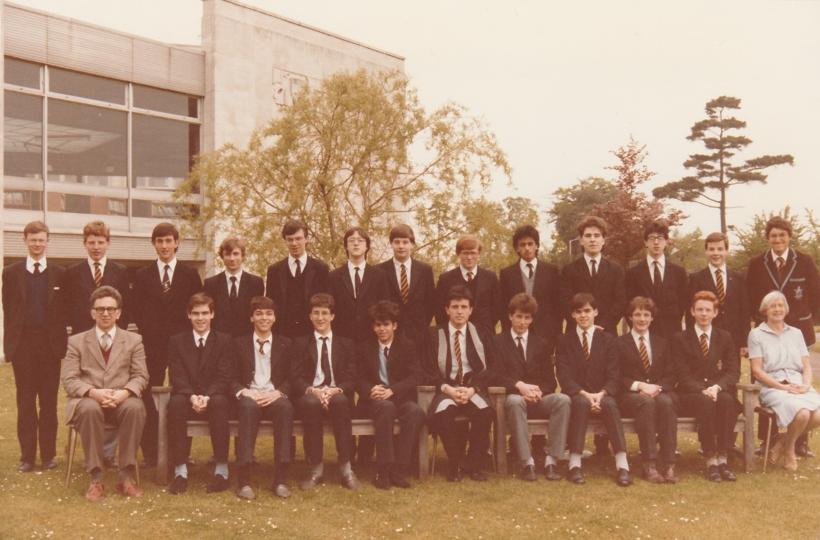
Several of his former pupils recall theatre trips organised by Alan for sixth formers and staff to theatres such as the Old Vic, the National Theatre and to the Yvonne Arnaud in Guildford. As if running a major department were not enough, Alan was also master-in-charge of the school library, later with the help of a professional librarian. On one of the slides, Alan is seated at the end of the row, accompanied by the serried ranks of boy librarians he trained up.
Last year, Alan told us of an upsetting experience he had at his first school, where the headmaster told him he shouldn’t be in teaching – it was not the right career for him. Thank goodness Alan persevered as a teacher. Maybe this experience taught him always to encourage others in the kind and caring manner he did.
Of course Trinity was not the only focus of Alan’s life. While my first acquaintance with Alan was as David’s Head of Department, when I joined this church 40 years ago, I gradually discovered what a pillar of the church community Alan was. His name was on the myriad of rotas that keep the church running, with practical tasks such as cleaning, gardening, photocopying and - flower arranging! Once Alan had been initiated as a flower arranger, he would quip that you “should never be able to see the Oasis”.
Flower arranging also gave Alan an opportunity to use his pastoral gifts. On Mondays, the church flowers from Sunday services were divided into posies or bunches, and Alan would help deliver these to people who were unable to come to church. He was so involved in many other ways in church life, some visible activities such as welcoming worshippers and driving church members to services; and some less visible, such as collating the weekly church notices, which he did for many years, and being a member of the prayer chain. Alan demonstrated his strong Christian faith by his actions, performed quietly without a fuss.
As a Lay Preacher, Alan was also a worship leader, and this led to a wider circle of friends and acquaintances. He regularly preached at other churches in the Croydon as well as neighbouring Methodist Circuits. As an experienced Lay Preacher, Alan mentored many trainee Lay Preachers. One recalls how once, when Alan was leading morning service at her church, he asked her to take the children’s address. When she said she wasn’t sure she could, he told her firmly she’d be fine. She was. Alan encouraged and instilled confidence in others. And while Alan gave compliments, he found them hard to receive. He was both modest and humble.
In 1986 Alan bought his first home in Ashburton Road, Addiscombe, and settled into his flat in Sullivan Court. He soon became a moving light in that community. All residents were owner-occupiers and leaseholders. Alan became the Chairman of the Sullivan Court Property Company, a role in which he apparently revelled. The residents became company shareholders and, thanks to Alan’s hard work, were able to buy their freeholds. He also had a reputation for diplomacy, helping to restore good relations if any of the residents fell out with each other.
At last, Alan was able to offer hospitality in his own home. He loved having family members to stay – there are a few slides showing visiting relatives arriving or departing. At home, Alan was always an attentive and generous host; afternoon teas and dinner parties were pretty lavish occasions; Alan always pulled out the stops.
After Alan’s career in teaching, of which 27 years were spent at Trinity, he had almost 27 years of retirement. He made the most of life then, using his freedom pass to catch the train to central London, and he enjoyed so many plays and musicals at West End theatres, accompanied by different friends and by family members.
After 14 years at Sullivan Court, Alan moved to a new flat in Westgate Road, Beckenham, principally to be near to his good friend, Tom Grundy who had also worked at Trinity, as a German language teacher. They got on extremely well; Alan was the Laurel to Tom’s Hardy. Alan went on holidays with Tom, staying in bed and breakfast accommodation, particularly to the West Country and to Yorkshire.
Alan had a wide circle of friends, still keeping in touch with people he’d known in March, in Cambridge, and from churches and teaching posts in Chelmsford and Rickmansworth. As well as his regular trips by car to see family in East Anglia, he travelled widely in England, visiting old friends and inviting them to stay with him.
After David retired, he was invited to join a monthly walking group, comprising Alan, Tom and Paul Wright, another wonderful teacher, who taught French at Trinity. Paul also worshipped at Shirley Methodist where he too was a pillar of the community – much loved and much missed. Several slides show the walkers, which eventually included me. We took it in turns to choose and plan the route; Alan’s were planned with military precision and accompanying handouts. David recalls a high level of often-erudite banter. There was a formula to these occasions, which were typically to include an elevated vista, a “water feature” (a lake, canal or river), some superior domestic architecture - always greeted with the facetious comment “teachers could never aspire”, and, of course, the all-important pub lunch. During the wetter, cooler months of the year, the group chose to look northwards towards London, where visits to museum and gallery exhibitions replaced tramping over muddy fields and stiles.
As the group aged, the walks shortened and then became strolls round National Trust gardens. The sad death of Paul in 2011 and the increasing infirmities of Tom and Alan brought the outings to an end, but even last year Alan still enjoyed being taken to the gardens and café at Beckenham Place Park.
And so, sadly, we come to the last days of our true, wise friend called Alan and to sum up what he meant to us:-
David Parchot employs a literary allusion to describe the essential Alan. In Graham Greene’s “Brighton Rock” a character says “it’s like those sticks of rock: bite it all the way down, you’ll still read Brighton.” Well, the word that could be read from top to bottom all the way through Alan was “kindness.”
Alan was a true gentleman who was very modest and unassuming, unaware of his own worth and who would be blushing to hear this eulogy. Amid all the increasing isolation and confusion of dementia in recent years, he remained quintessentially the lovely man we first knew fifty years ago. He will be long remembered and much missed.”